
8 weeks plan (Example city : Delhi, India)
Focus Delhi
For the sake of scope, we try to create a model based on the current situation in Delhi and potentially this can be replicated in other cities as well. The current situation in Delhi is that it has already officially recorded more than 30,000 cases and right now the spread of the virus is in all parts of the city. The current strategy is to still keep opening up the economy despite these saddening numbers. Just today, the CM announced the opening of restaurants and malls, and also opened the borders for other states. Right now Delhi is officially registering more around 1000–1400 cases per day and this means around 4-6% cases everyday (https://www.covid19india.org/state/DL). The trend has been only growing upwards and if we follow this trend (based on a simple Google forecasting model), Delhi will have more than 80,000 cases by 1st of July.

The Plan
So, what is our 8 week plan to control the situation? Needless to say that because we have opened the economy in the wrong way, we will have to start over with a very strict lockdown. However, we will try to open the economy in a more scientific way this time around, resulting in a more long lasting impact.
Step 1: Bring Back Lockdown 1:
The first step is to bring back a very strict lockdown. The city is completely sealed and only in exceptional circumstances people are able to enter the city. This will ensure no infection is coming from outside the city to Delhi. Only essential goods should be allowed to come into the state. Within the state limits, strict curfew-like conditions should be evoked again. Because of the relaxations and uncertainties, people are now better prepared to handle this situation. This will ensure less opportunities of spread.
Step 2: Divide state into 44 economic Zones:
Delhi comprises 11 districts and the total population of Delhi is around 2 Crores, so each district has roughly 20 lakh residents. We propose to divide each district into four Zones. This division will become the foundation of our recovery later on. Having around 5 lakh people in one Zone means enough economic activity can happen in the Zone itself once the lockdown is lifted. These Zones should be designed by taking into account the following: Each Zone is completely sealed from other Zones. So, even when the lockdown is relaxed, people can not travel across the Zones.
Each Zone should have enough medical facilities to support their own Zone. The entry and the exit to these Zones is guarded and only in exceptional circumstances people are allowed to cross the Zone boundaries.
Step 3: 21 days to flatten the curve:
As in most countries that followed such a plan, it took them around 3 weeks to see impact on the numbers. The first two weeks can still see an increase in the number of new cases but from the third week onwards the new cases should start to decline and the curve will begin to flatten. In this time, the government has to create awareness and provide supplies to people so that they don’t leave their homes except in emergencies. The flattening of the curve is evident in countries like Germany, where the impact was seen in 3–4 weeks after the initial lockdown. Lockdown was announced in early April and curve gets flat in early May.

Step 4: Measure cases per lakh in each Zone and colour code Zones:
Again inspired from Germany, where the authorities came up with this concept to assign a colour to each district based on the number of new cases per lakh in the last 7 days. In the cases of Delhi the following colour coding is suggested, based on the number of cases per lakh in the last 7 days.
- More than 50 cases / lakh: Maroon Zone
- Between 25 and 50 : Red Zone
- Between 10 and 25: Orange Zone
- Between 5 to 10: Yellow Zone
- Between 1 to 5: Beige Zone
- 0: Light Green Zone
- 0 Cases in last 15 Days: Dark Green Zone
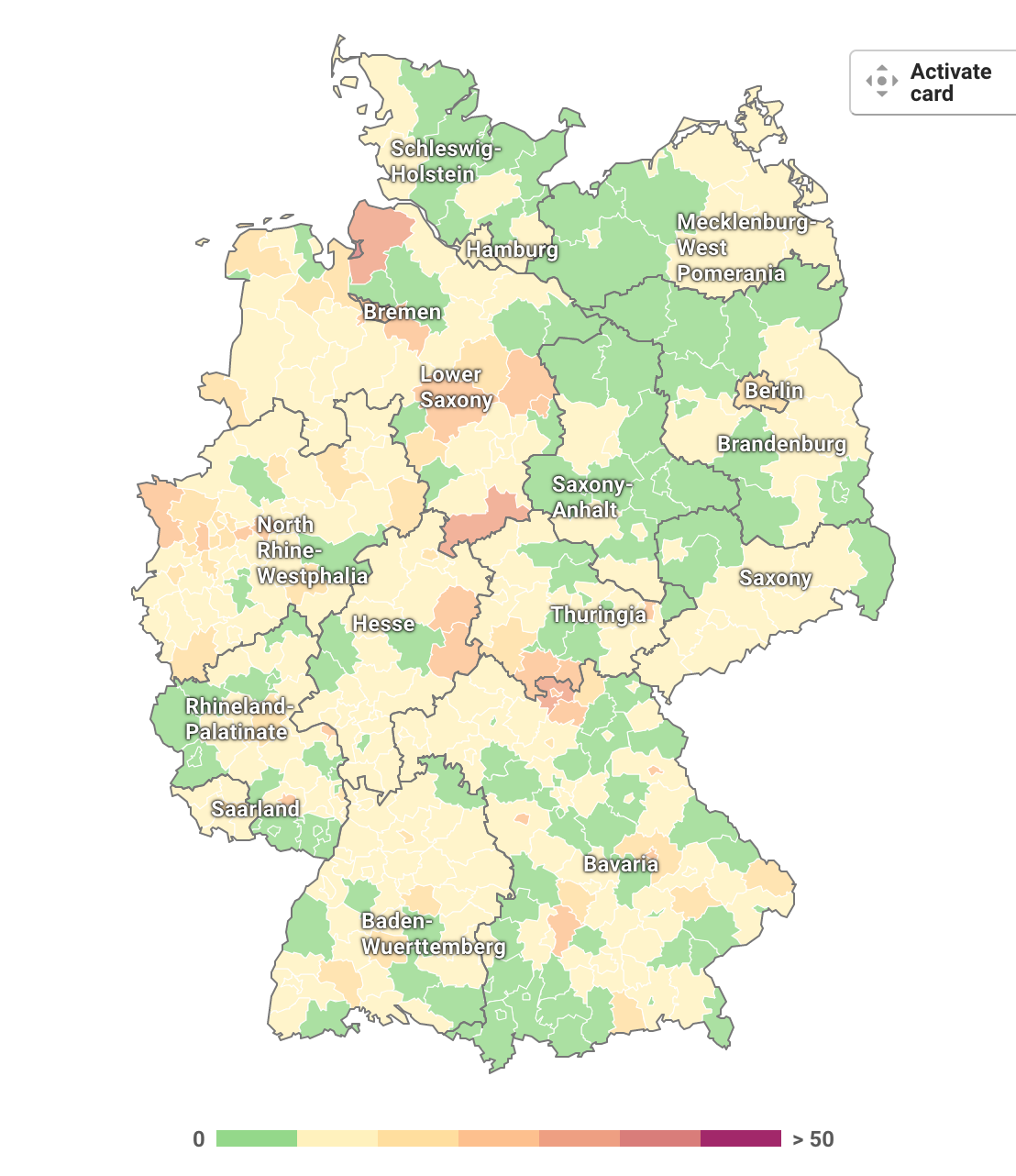
Step 5: Go Green to open up:
Measuring this one number will enable us to decide about the next steps for a particular zone. In the beginning most Zones will either be Maroon or Red. By the end of the first 21 days, some Zones will start turning orange and potentially also yellow. So, the rules of opening up will be like this:
- The state remains sealed. This should stay like this for the foreseeable future.
- No inter zone travel or activity is allowed even now. This is the last step of the strategy.
- If a Zone is Maroon or Red even after the initial 21 days, the curfew like lockdown continues in these Zones. More awareness and stricter social distances norms need to be implemented in these areas.
- If a Zone Orange: this means the Zone is going in the right direction. The lockdown should still be however maintained strictly. After a Zone stays in this state for a week, only then some relaxation can be thought of. In the beginning relaxation could be to allow online deliveries of some items. No entertainment, restaurants, public transport etc should be allowed.
- Yellow: Getting to the Yellow state should happen in 4–5 weeks, this is when some relaxing can be thought of. At this state the relaxations can be to allow people to order food from outside, opening of smaller shops. No shop or establishment of more than 200 sq meters should be opened. People should enter the shops only maximum of 8 people at a time and only if they are wearing masks. They should wait in a queue outside the shop if the shop already has 8 people inside. No offices should still open.
- Beige: This colour can be achieved by some zones who follow the lockdown strictly in about 6 weeks. Once a Zone reaches this state, extreme care has to be taken, No extra relaxation should be provided. As soon as a Zone reaches this state, an additional lockdown is started for one week. This will ensure that the Zone can quickly turn green and economic activity can be started properly. After one week, if the Zone stays beige, the relaxations of the yellow state should be restored.
- Light Green: This is our first victory and a Zone which follows all the steps, should turn light green in 6 weeks. Other Zones might take 2–3 weeks more to reach here. At this point, some more relaxation should be provided. Masks should still be mandatory and no entertainment facilities should still open up.
- Dark Green: This is when we can declare a Zone truly free of the virus. Now at this state, we can safely assume that there is no community based spread within this Zone. Care should be taken however, because some existing active infections could still be there. At this point, more relaxations can be provided within the Zone and businesses who ensure social distancing is taken care of within their establishment, can be opened up. What everyone in the Zone should remember, that by having just one new case, the Zone will lose all its relaxation.
Once a zone stays in the Dark green state for 4 weeks and there are no known active infections, the Zone can be considered completely free of the virus and further economic activities like public transport within the Zone can be started. Once two neighbouring zones are in the dark green state for 6 weeks, they can be unsealed and people should be allowed to travel inter zones. Again, if at any point even one case is found, the authorities should immediately go back to the individual Zone separation and beige colour for both the zones.
The primary idea of this strategy is to reach the Green status as soon as possible and protect this status as tightly as possible. We believe that it is better to take the economic hit once for 8–10 weeks rather than reaching a state where the spread is uncontrollable for the government to manage.